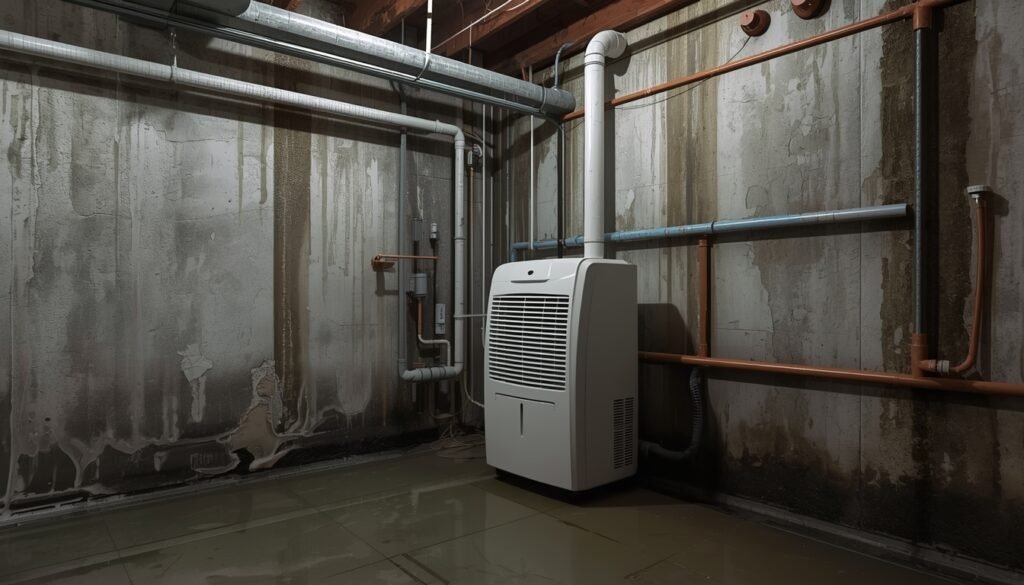
In most homes, a basement dehumidifier not working properly usually means it is either not removing enough moisture or not running as expected. A common issue is assuming the unit has failed completely, when in reality the problem is often related to setup, sizing, or conditions in the basement rather than the machine itself.
This typically happens when the dehumidifier cannot keep up with the level of moisture in the space or when something is preventing it from operating efficiently. Many people find that once they identify the cause, the problem can often be resolved without replacing the unit.
What Does Not Working Properly Usually Mean?
- The basement still feels damp even when the unit is running
- Humidity levels are not dropping to the desired range
- The unit runs constantly without improvement
- The dehumidifier turns on and off frequently without removing much moisture
In most homes, these symptoms point to a performance issue rather than total failure. Many people find that the unit is technically running, but the results are not strong enough to change basement conditions.
The Most Common Causes
- The dehumidifier is too small for the size or dampness of the basement
- Airflow is restricted due to poor placement or surrounding obstacles
- The filter is dirty, reducing efficiency
- The humidity setting is too high, limiting how much moisture is removed
- Moisture is continuously entering the basement from outside
In most homes, one or more of these factors is responsible. A common issue is underestimating how much moisture is present, which leads to choosing a unit that cannot keep up.
Is the Dehumidifier the Right Size?
One of the most frequent problems is using a dehumidifier that is too small for the space. In most homes, an undersized unit will run constantly but still fail to lower humidity levels enough to make the basement feel dry.
Many people find that once they move up to a higher-capacity model, performance improves quickly. This typically happens because the new unit can remove moisture faster and maintain the target humidity more reliably.
Could Placement Be the Problem?
Placement plays a major role in how well a dehumidifier performs. In most homes, poor placement reduces airflow and limits how much humid air can reach the unit.
A common issue is putting the unit in a corner, behind storage, or too close to walls. Many people find that moving the dehumidifier into a more open location improves performance within a day or two because more air is able to circulate through the machine.
Is the Unit Running but Not Removing Water?
If the unit is running but not collecting much water, it may still be working but under the wrong conditions. In most homes, this can happen when the humidity setting is already close to the current level, when the basement temperature is too low, or when airflow is restricted.
Many people find that cleaning the filter and lowering the humidity setting improves water collection quickly. A common issue is expecting water output to stay high all the time, when in reality it drops as the basement dries out.
Is Moisture Still Entering the Basement?
Even a properly functioning dehumidifier cannot fully solve a basement that is constantly taking on new moisture. In most homes, seepage through walls, poor drainage around the foundation, humid outdoor air, or condensation can all keep replacing the moisture the unit removes.
Many people find that once they improve outside drainage or reduce moisture entry points, the dehumidifier suddenly seems much more effective because it is no longer working against a constant supply of new dampness.
How to Troubleshoot Step by Step
Start by checking the humidity setting and making sure it is between 30 and 50 percent. Clean the filter, make sure the unit has open airflow around it, and confirm that its capacity matches the size and dampness of the basement.
Then look for bigger environmental issues, such as ongoing water entry, musty smells, or condensation. In most homes, working through these steps methodically solves the problem more quickly than assuming the unit needs to be replaced.
When Should You Consider Replacing It?
If the unit no longer turns on, stops frequently, makes unusual noises, or still fails to remove moisture after troubleshooting, replacement may be worth considering. In most homes, older models also become less efficient over time and may no longer be strong enough for the space.
Many people find that when a dehumidifier is very old and already struggling, replacing it is more practical than repeated attempts to keep it working.
Final Thoughts
If your basement dehumidifier is not working properly, the problem is usually related to setup, conditions, or capacity rather than total failure. In most homes, identifying the real cause restores performance and prevents unnecessary replacement.
By checking sizing, placement, maintenance, and moisture sources, you can usually improve how well the unit works and maintain a drier, more comfortable basement.
If you want a broader overview of basement moisture, humidity control, and how dehumidifiers fit into the bigger picture, see our Complete Guide to Basement Dehumidifiers.