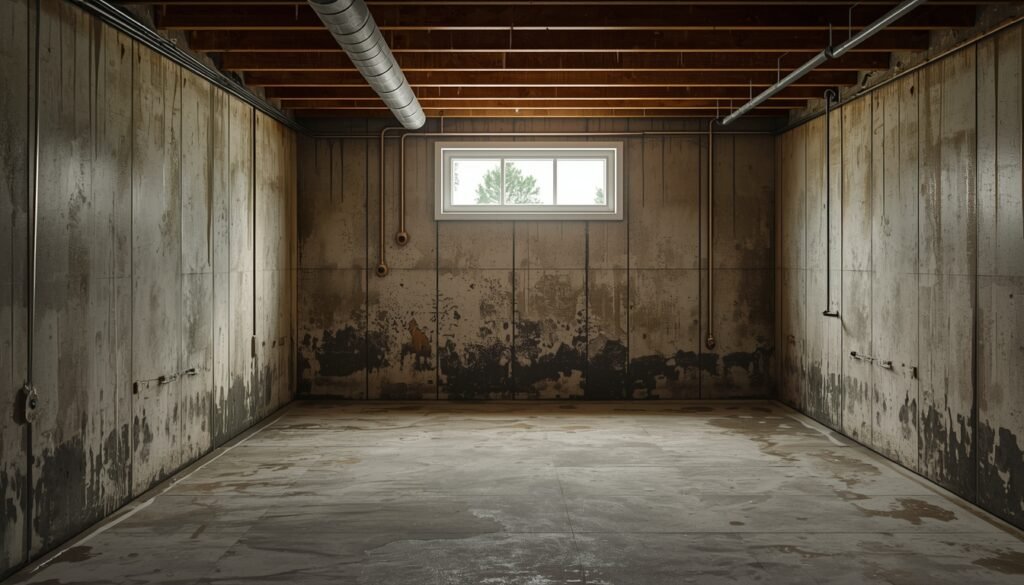
A basement can feel humid even when there are no visible leaks, puddles, or water damage. This often confuses homeowners because the assumption is that moisture only comes from obvious water entry. In most homes, basement humidity is caused by moisture in the air and building materials rather than visible water. A common issue is that this moisture builds up slowly, making it harder to notice until the space starts to feel damp or uncomfortable.
This article explains why basements become humid without leaks, how this affects your home, the signs to look for, and practical ways to fix the problem. Understanding what is really causing the humidity is the first step to controlling it effectively.
Basement humidity without a leak is usually the result of moisture entering gradually through walls and floors, combined with limited airflow that allows it to build up over time.
Why Basements Naturally Hold Moisture?
Basements are surrounded by soil, and soil holds water from rain and groundwater. This moisture does not just stay outside. It slowly transfers through foundation walls and floors. This typically happens because materials like concrete are slightly porous, allowing small amounts of moisture to pass through even when everything looks solid and intact.
In most homes, basements also have limited ventilation. A common issue is that air becomes trapped, which prevents moisture from escaping. Without proper airflow, even a small amount of moisture entering the space can lead to rising humidity levels.
For example, after heavy rain, the ground around your home becomes saturated. Over time, that moisture can move inward, raising humidity levels in your basement without creating any visible water.
How Humidity Builds Up Without a Leak?
Humidity does not require standing water to become a problem. Many people find that their basement feels damp simply because moisture is present in the air. This typically happens when warm, humid air enters the basement and cools down, increasing the relative humidity.
A common issue is temperature difference. Basements are usually cooler than the rest of the home, so when warmer air enters, it releases moisture as it cools. This can raise humidity levels even if there is no direct water source.
Another factor is everyday moisture entering the space. Activities such as doing laundry nearby or even opening basement doors during humid weather can introduce additional moisture into the air.
Signs Your Basement Is Humid
- A musty or stale smell that lingers in the space
- Condensation on walls, pipes, or windows
- A damp or sticky feeling in the air
- Mold or mildew appearing on surfaces or stored items
Many people find that these signs appear gradually. This typically happens when humidity builds up over time rather than from a sudden event.
Key Factors That Cause Basement Humidity
- Moisture entering through walls and floors from surrounding soil
- Poor ventilation that traps humid air inside
- Warm air entering the basement and cooling
- Seasonal humidity changes, especially in warmer months
In most homes, it is a combination of these factors rather than a single cause. Identifying which ones apply helps you choose the most effective solution.
Why This Matters?
Many people find that basement humidity affects more than just comfort. Over time, it can lead to damage and ongoing issues if it is not controlled.
A common issue is that materials in the basement absorb moisture. Items like cardboard, wood, and fabric can hold moisture and contribute to a damp environment. This can create a cycle where humidity continues to build.
Humidity can also affect air quality. Musty odors can spread to other parts of the home, making the overall environment feel less fresh.
How to Fix a Humid Basement Without a Leak
- Use a dehumidifier to maintain humidity between 30 and 50 percent
- Improve airflow by keeping the space open and uncluttered
- Seal small cracks or gaps where moisture can enter
- Ensure proper drainage around your home to reduce soil moisture
For example, many homeowners notice that running a dehumidifier consistently makes the basement feel noticeably drier within a few days. Over time, this helps prevent moisture from building up again.
Common Mistakes
One common mistake is assuming that no leak means no problem. Another is relying on ventilation alone, which may not be effective in humid conditions.
Some homeowners also ignore early signs such as odors or slight dampness. This typically allows humidity to build up further before action is taken.
If you want a broader overview of how basement moisture, humidity levels, and dehumidifier use all fit together, see our Complete Guide to Basement Dehumidifiers.
Final Thoughts
A basement can be humid without any visible leaks because moisture often enters slowly and builds up over time. By understanding the causes and recognising the signs, you can take practical steps to control humidity and improve your space.
In most homes, managing humidity is one of the most important steps in maintaining a dry, comfortable, and healthy basement.