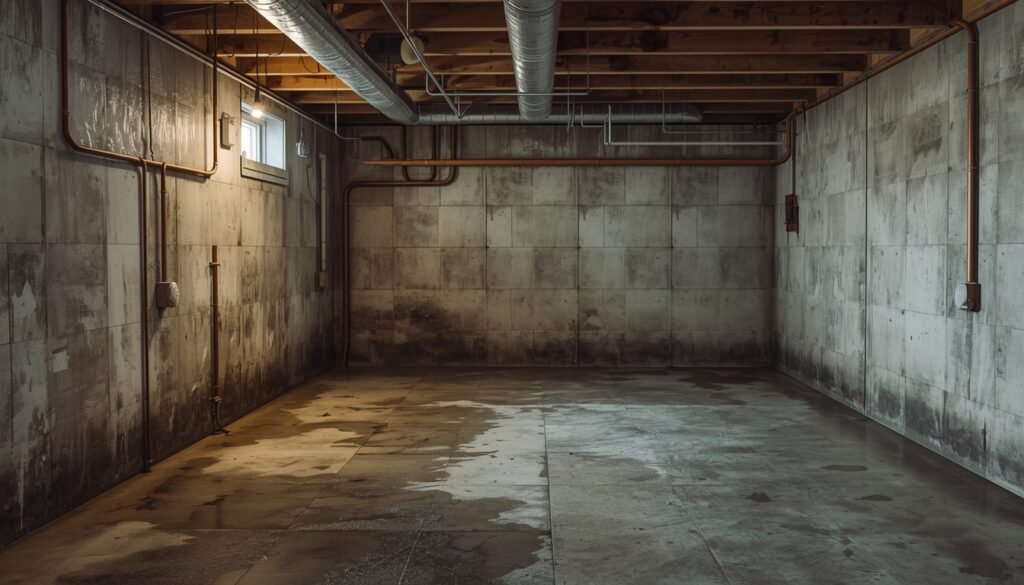
Knowing whether your basement is too humid is not always obvious at first. In most homes, humidity problems develop gradually, which makes them easy to overlook until more noticeable issues appear. A common issue is that homeowners assume everything is fine as long as there is no visible water, but humidity can still be high enough to cause problems without any obvious signs.
This article explains how to recognise high humidity in your basement, what it means for your home, the key signs to look for, and how to confirm and fix the problem. Understanding these indicators helps you take action early and prevent more serious issues later.
A basement is generally considered too humid when moisture levels rise above about 50 percent. At this point, the air holds enough moisture to create conditions for mold, odors, and material damage.
Why Basement Humidity Is Hard to Detect?
Basement humidity is often difficult to detect because it does not always produce immediate or visible effects. In most homes, moisture builds up slowly as it enters through walls, floors, and the surrounding environment.
A common issue is that the basement may feel slightly cool, which can mask the feeling of humidity. This typically happens because cooler air can hold less moisture, but still feel damp.
For example, you might walk into your basement and not notice anything unusual right away. Over time, however, subtle changes such as odors or a heavier feeling in the air begin to appear.
Common Signs Your Basement Is Too Humid
- A musty or stale smell that lingers in the space
- Condensation on pipes, walls, or windows
- A damp or sticky feeling in the air
- Mold or mildew forming on surfaces or stored items
Many people find that these signs appear gradually rather than all at once. This typically happens when humidity builds up over time without being controlled.
For example, you might first notice a slight odor, then later see condensation or small spots of mold. These are all indicators that humidity levels are too high.
How It Affects Your Basement?
High humidity affects more than just comfort. In most homes, it can lead to ongoing problems that impact both the basement and the rest of the house.
A common issue is that materials in the basement begin to absorb moisture. Items such as cardboard boxes, wooden furniture, and fabrics are particularly vulnerable. Over time, they can become damaged or develop odors.
Humidity can also affect air quality. Many people find that musty smells spread from the basement to other parts of the home, making the entire space feel less fresh.
Key Factors That Contribute to High Humidity
- Moisture entering through walls and floors from surrounding soil
- Poor ventilation that traps humid air inside
- Seasonal changes, especially during warmer months
- Warm air entering the basement and cooling
In most homes, it is a combination of these factors rather than a single cause. Understanding what is contributing to your humidity helps you choose the right solution.
How to Measure Basement Humidity
The most accurate way to determine if your basement is too humid is to measure it directly. A hygrometer is a simple device that measures humidity levels in the air.
For example, if your hygrometer shows readings above 50 percent, this indicates that humidity is too high and should be reduced. Many people find that using a hygrometer provides a clear understanding of what is happening in their basement.
Monitoring humidity over time also helps you see patterns, such as increases during certain seasons or weather conditions.
How to Fix High Basement Humidity
- Use a dehumidifier to remove excess moisture from the air
- Improve airflow by keeping the space open and uncluttered
- Seal small cracks or gaps where moisture can enter
- Ensure proper drainage around your home
For example, many homeowners notice a significant improvement within a few days of running a dehumidifier consistently. Over time, this helps stabilise humidity and prevent it from rising again.
Common Mistakes
One common mistake is relying on how the basement feels rather than measuring humidity. Another is ignoring early signs such as odors or condensation.
Some homeowners also assume that humidity problems only occur during certain seasons, when in reality they can happen year-round.
Delaying action is another issue, as this allows humidity to continue building and causing damage.
If you want a broader overview of how basement moisture, humidity levels, and dehumidifier use all fit together, see our Complete Guide to Basement Dehumidifiers.
Final Thoughts
Knowing if your basement is too humid is essential for maintaining a comfortable and healthy home. While the signs may not always be obvious at first, paying attention to changes in smell, air quality, and moisture can help you identify the problem early.
By measuring humidity and taking practical steps to control it, you can prevent long-term damage and create a more usable basement space.