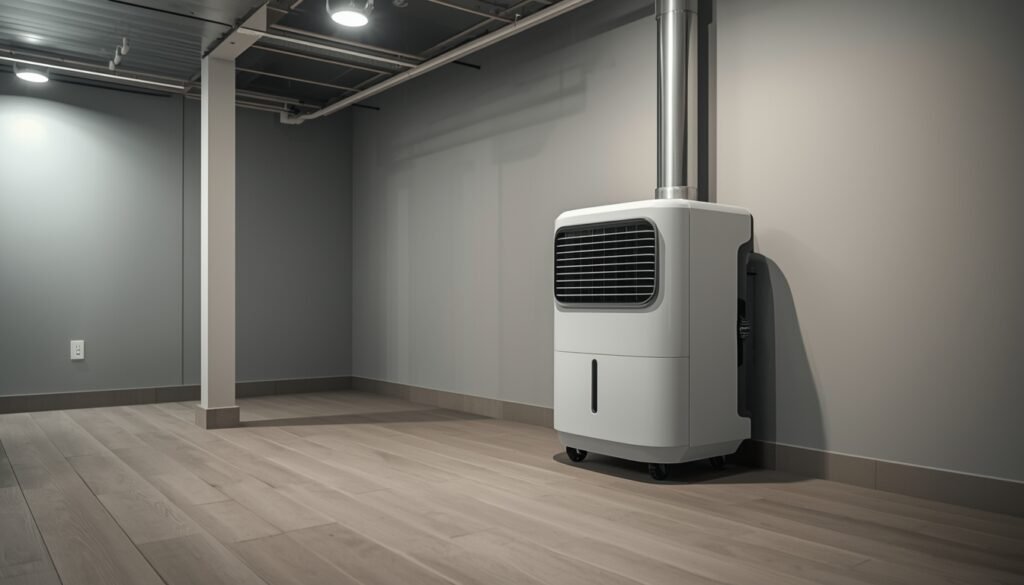
A basement dehumidifier works by removing excess moisture from the air and helping maintain a stable, comfortable environment. In most homes, basements naturally collect more humidity than other areas because they are below ground level and surrounded by moisture-retaining soil. A common issue is that this moisture builds up gradually, making the basement feel damp even when there is no visible water.
This article explains how a basement dehumidifier works, what happens during the process, how it affects your basement in real-world situations, and how to use it effectively. Understanding how the unit operates helps you get the best results and avoid common mistakes.
At its core, a dehumidifier pulls in humid air, removes the moisture, and releases drier air back into the room. This process repeats continuously until the humidity level is reduced to a comfortable range.
What Happens Inside a Dehumidifier?
A dehumidifier works using a simple but effective process that removes moisture from the air. When the unit is running, it pulls in air from the surrounding space and passes it over a cold coil.
This typically happens when the internal fan draws air into the unit. As the air cools, moisture in the air condenses into water droplets, similar to how condensation forms on a cold surface.
The collected water is then stored in a tank or drained away through a hose. The air, now drier, is slightly reheated and released back into the basement.
For example, many people find that after running a dehumidifier for a few hours, the basement begins to feel less damp and more comfortable. This is because moisture is being actively removed from the air.
Why This Process Is Important?
Removing moisture from the air is essential for controlling humidity. In most homes, basements are exposed to constant sources of moisture, including soil, temperature differences, and limited airflow.
A common issue is that without a dehumidifier, this moisture builds up and creates a damp environment. This typically happens slowly, making it harder to notice until problems develop.
By continuously removing moisture, the dehumidifier prevents humidity from reaching levels where mold, odors, and damage can occur.
What Problems Does a Dehumidifier Help Prevent?
- Mold and mildew growth on surfaces and stored items
- Musty odors that develop in damp environments
- Condensation on walls, pipes, and windows
- Damage to materials such as wood, fabric, and cardboard
Many people find that once humidity is controlled, these problems either stop developing or begin to improve.
How Does It Work Over Time?
A dehumidifier does not dry a basement instantly. Instead, it works gradually over time to reduce moisture levels. In most homes, the unit will run continuously at first until the humidity drops to the desired level.
After that, it will cycle on and off as needed to maintain stable conditions. This typically happens when the built-in humidistat detects changes in humidity.
For example, if humidity rises after rain or during warm weather, the dehumidifier will automatically start running again to bring levels back down.
Over time, this creates a balanced environment where moisture is controlled consistently.
Key Factors That Affect How Well It Works
- The size and capacity of the unit
- The level of humidity in the basement
- Airflow and how well air circulates
- The presence of ongoing moisture sources
In most homes, choosing the right size unit and ensuring proper airflow makes a significant difference. A common issue is using a unit that is too small, which limits its ability to control humidity effectively.
How to Use a Basement Dehumidifier Effectively?
- Set the humidity level between 30 and 50 percent
- Place the unit in an open area for better airflow
- Keep doors and windows closed while it is running
- Use continuous drainage if available to avoid interruptions
For example, many homeowners find that once the unit is set up properly, it maintains stable humidity levels with minimal effort. This makes the basement more comfortable and reduces the risk of moisture problems.
Common Mistakes
One common mistake is expecting immediate results. A dehumidifier works gradually, so it takes time to reduce moisture levels fully.
Another mistake is placing the unit in a corner or behind objects, which restricts airflow and reduces efficiency.
Some homeowners also turn the unit off too early, which allows humidity to rise again.
Ignoring maintenance, such as cleaning filters or emptying the water tank, can also affect performance.
If you want a broader overview of how basement moisture, humidity levels, and dehumidifier use all fit together, see our Complete Guide to Basement Dehumidifiers.
Final Thoughts
A basement dehumidifier works by removing moisture from the air and maintaining a stable humidity level over time. In most homes, this process is essential for preventing mold, odors, and damage caused by excess moisture.
By understanding how a dehumidifier works and using it correctly, you can create a drier, more comfortable basement and protect your home from long-term moisture problems.