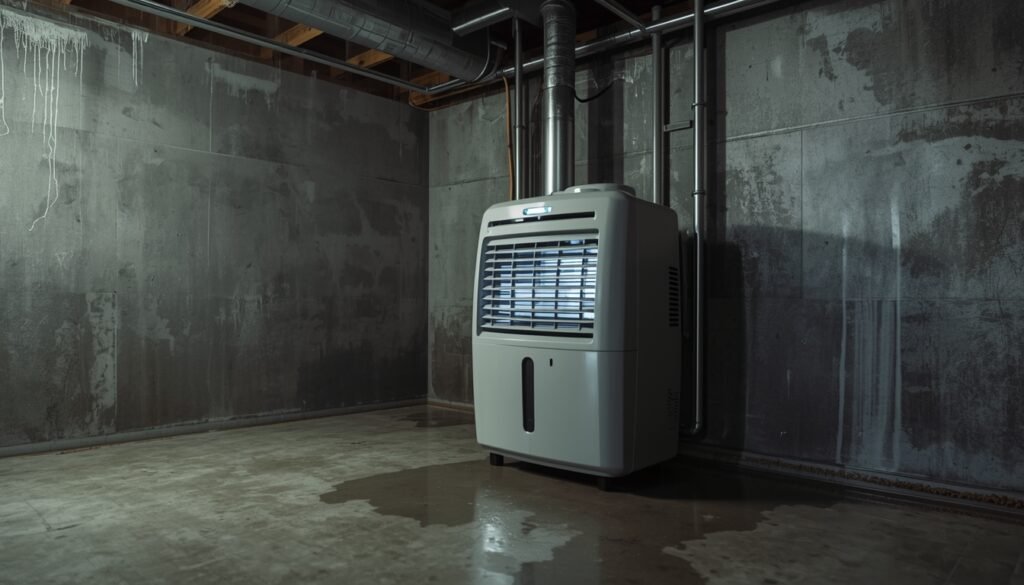
In most homes, you can leave a basement dehumidifier running all the time, and in many cases this is actually the most effective way to maintain stable humidity levels. A common issue is worrying that continuous operation will damage the unit or waste energy, when in reality most modern dehumidifiers are designed to run for extended periods and cycle on and off automatically as needed.
This typically happens because dehumidifiers are built with a humidistat, which allows them to monitor moisture levels in the air. Instead of running constantly at full power, the unit turns on when humidity rises above a set level and turns off once the desired range is reached.
Why Continuous Operation Is Often Recommended
- Moisture continues to enter through walls and floors over time
- Humidity can increase after rain or weather changes
- Temperature differences can create condensation on surfaces
- Stored moisture in materials can slowly release back into the air
In most homes, humidity is not a one-time issue. Many people find that leaving the dehumidifier on helps prevent conditions from rising and falling, which keeps the basement more stable and more comfortable over time.
Is It Safe to Leave a Dehumidifier Running?
In most homes, it is safe to leave a basement dehumidifier running continuously as long as it is used correctly and maintained properly. Modern units are designed for long operating periods and usually include safety features such as automatic shut-off when the tank is full.
A common issue is assuming that long run times mean the unit is under stress. Many people find that the opposite is true when the humidistat is used properly, because the dehumidifier only works when it actually needs to.
Does Running It All the Time Use Too Much Energy?
Energy use is a common concern, but in most homes the actual cost is lower than expected because the unit does not run continuously at full power. Once the humidity target is reached, the dehumidifier cycles off and waits until moisture rises again.
Many people find that setting the humidity between 30 and 50 percent gives the best balance between comfort and efficiency. A common issue is setting the humidity too low, which makes the unit run more often than necessary.
Signs You Should Keep It Running Continuously
If the basement feels damp most of the time, smells musty when the unit is turned off, or regularly rises above 50 percent humidity, those are good signs that ongoing operation is helpful. In most homes, condensation on surfaces is another clue that moisture control needs to stay active.
Many people find that turning the dehumidifier off completely causes the same humidity problems to return surprisingly quickly, especially during humid weather or after rain.
When You Might Not Need It Running All the Time
- The basement stays consistently below 50 percent humidity
- There are no signs of dampness, odors, or condensation
- The space has good ventilation and low moisture exposure
- Seasonal conditions reduce humidity naturally
In these situations, the dehumidifier may still be left on, but it will cycle much less often. In most homes, leaving it available with automatic control is still easier and safer than turning it off completely and forgetting to monitor humidity.
How to Run a Dehumidifier Effectively
Using the dehumidifier efficiently matters just as much as leaving it on. Place the unit in an open area with good airflow, keep the filter clean, and use continuous drainage if possible so the tank does not interrupt operation.
Many people find that once the unit is set correctly, it maintains stable conditions with very little effort. This typically makes continuous use far more practical than checking the basement constantly and turning the unit on only after the space already feels damp.
Common Mistakes
One common mistake is turning the dehumidifier off completely as soon as the basement feels dry, which allows humidity to build again. Another is setting the humidity too high, so the space still feels damp even while the unit is technically operating as intended.
Using an undersized unit or ignoring filter maintenance can also make it seem like continuous operation is not working, when the real issue is performance rather than runtime.
Final Thoughts
You can leave a basement dehumidifier running all the time, and in most homes this is one of the best ways to keep humidity under control. Modern units are designed to cycle automatically, so leaving them on does not mean they are always working hard.
By setting the right humidity range and maintaining the unit properly, you can keep your basement drier, fresher, and more comfortable without having to manage the dehumidifier constantly.
If you want a broader overview of basement moisture, humidity control, and how dehumidifiers fit into the bigger picture, see our Complete Guide to Basement Dehumidifiers.