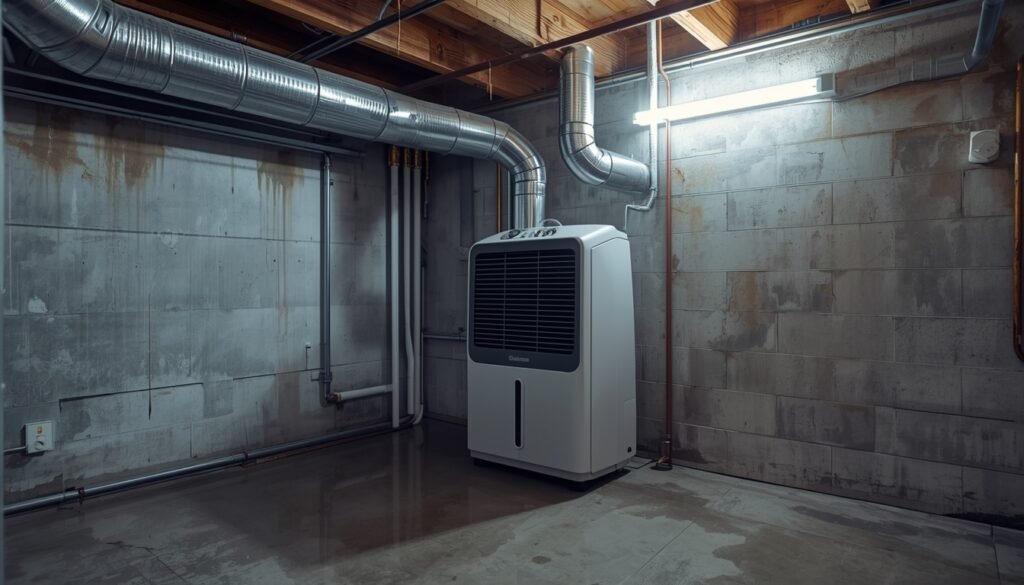
In most homes, running a basement dehumidifier all year round is not always necessary, but some level of ongoing humidity control is often required throughout the year. A common issue is assuming that moisture is only a problem during hot and humid months, when in reality basements can hold moisture in every season due to their location below ground.
This typically happens because basements are surrounded by soil that retains water, and they often have limited airflow. Even when outdoor conditions feel dry, moisture can still enter slowly through walls and floors or remain trapped inside the space. As a result, many people find that turning a dehumidifier off completely can lead to humidity building up again over time.
Why Basement Humidity Is Not Just a Summer Problem
Many homeowners associate humidity with warm weather, but basement conditions behave differently from the rest of the house. In most homes, basements stay cooler than upper levels, which changes how moisture behaves. Warm air can move into the basement, cool down, and release moisture onto cold surfaces.
A common issue is assuming that cool air means dry air. In reality, cool basement conditions can still allow dampness to persist, especially if moisture is entering from surrounding soil or from condensation on pipes and walls.
When Basements Need a Dehumidifier Most
- During warm and humid months when outdoor air brings in moisture
- After heavy rain when surrounding soil becomes saturated
- In basements with poor ventilation or limited airflow
- In spaces used for storage where moisture can build up unnoticed
In most homes, the highest humidity levels occur during late spring and summer. Many people find that this is when the dehumidifier runs most frequently because warm air carries more moisture. However, that does not mean humidity disappears in colder months. Moisture can remain trapped in basement materials even when the air outside feels dry.
What Happens If You Only Run It Seasonally?
- Humidity may build up during off months without being noticed
- Stored moisture in walls and floors can slowly return to the air
- Musty smells may reappear after periods of inactivity
- Mold or mildew may develop if humidity rises unexpectedly
Many people find that turning the dehumidifier off completely leads to fluctuating conditions. This typically happens when the space feels dry for a while, but moisture continues entering from the ground or from air movement inside the home.
Do You Need It in Winter?
In most homes, a dehumidifier does not need to run as often during winter, but that does not mean it should be ignored entirely. Basements can still hold moisture in cold weather, especially when ventilation is limited or when condensation forms on cold surfaces.
Many people find that the unit runs less often in winter but still turns on occasionally to maintain stable humidity. This typically means a dehumidifier can be left on with automatic control rather than being shut off for the entire season.
How to Manage Year-Round Humidity
The best approach is usually to let the dehumidifier respond automatically to actual conditions rather than guessing. In most homes, setting humidity between 30 and 50 percent allows the unit to run only when needed.
Using a hygrometer helps you see seasonal patterns more clearly, and many people find that once they start monitoring humidity, they realise the basement needs at least occasional moisture control even in cooler months.
Signs You Should Keep It Running Year-Round
If the basement feels damp in winter, smells musty when the unit is turned off, or regularly rises above 50 percent humidity, those are strong signs that ongoing control is needed. In most homes, condensation on walls, windows, or pipes is another clue that moisture is still present even when the air feels cooler.
A common issue is assuming that because the basement is less humid than summer, it no longer needs any help. Many people find that small humidity spikes still happen after rain or sudden temperature changes.
Common Mistakes
One common mistake is turning the dehumidifier off completely after summer and never checking humidity again until musty smells return. Another is assuming that dry outdoor air automatically means the basement is dry.
Some homeowners also run the unit inconsistently, which allows humidity to rise and fall instead of staying stable. In most homes, that kind of stop-start pattern makes moisture harder to control over time.
Final Thoughts
Running a basement dehumidifier all year round is not always necessary at full capacity, but in most homes some level of year-round humidity control is beneficial. Moisture does not disappear completely with the seasons, and allowing it to build up can lead to odors, dampness, and long-term problems.
By monitoring humidity and letting the unit run automatically as needed, you can keep the basement more stable and comfortable throughout the year without using more energy than necessary.
If you want a broader overview of basement moisture, humidity control, and how dehumidifiers fit into the bigger picture, see our Complete Guide to Basement Dehumidifiers.