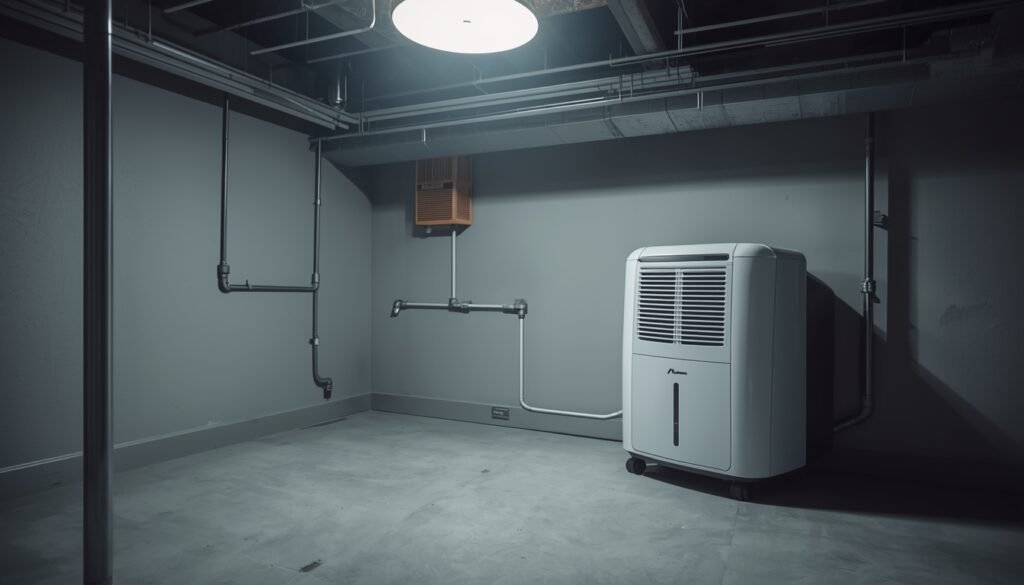
Not all basements require a dehumidifier, but in most homes, they benefit from having one. Basements are naturally more prone to moisture because they are located below ground level and surrounded by soil that holds water. A common issue is that homeowners assume a dehumidifier is only necessary if there is visible water or a leak, but humidity can still be high even when everything appears dry.
This article explains whether all basements need a dehumidifier, how to tell if yours does, what factors influence the decision, and how to manage humidity effectively. Understanding this helps you avoid unnecessary purchases while also preventing moisture problems from developing over time.
In simple terms, a basement needs a dehumidifier if humidity levels are high enough to cause discomfort, odors, or damage even if there are no visible signs of water.
Why Basements Are Prone to Humidity?
Basements tend to collect moisture because of their location and construction. In most homes, moisture enters through walls and floors from surrounding soil. This typically happens gradually and is not always visible.
A common issue is limited ventilation. Basements often have fewer windows and less airflow than other parts of the home, which allows moisture to build up over time.
For example, after heavy rain, the ground around your home becomes saturated. That moisture can slowly transfer into the basement, raising humidity levels even when there are no leaks.
When Does a Basement Need a Dehumidifier?
- A musty or stale smell in the basement
- A damp or sticky feeling in the air
- Condensation on pipes, walls, or windows
- Mold or mildew forming on surfaces or stored items
A basement does not always need a dehumidifier, but there are clear situations where one becomes necessary. In most homes, the need is determined by humidity levels rather than the presence of water.
Many people find that these signs develop gradually. This typically happens when humidity levels remain elevated over time without being controlled.
Basements That May Not Need a Dehumidifier
Some basements may not require a dehumidifier if conditions are already well controlled. This can happen in homes with good drainage, proper sealing, and effective ventilation.
For example, a basement that remains consistently dry, has no signs of dampness, and maintains humidity below 50 percent may not need additional moisture control.
However, even in these cases, conditions can change with the seasons. A common issue is that humidity increases during warmer months, which can make a previously dry basement become damp.
Key Factors That Determine the Need
- The level of humidity in the basement
- Seasonal weather conditions and climate
- Ventilation and airflow in the space
- Moisture entering through walls or floors
In most homes, it is not just one factor but a combination that determines whether a dehumidifier is needed. Monitoring these conditions helps you make the right decision.
What Happens If You Don’t Use One When Needed?
If a basement requires a dehumidifier and you do not use one, moisture problems can develop over time. A common issue is that these problems start small and become more noticeable as humidity remains high.
For example, you may first notice a slight odor, followed by condensation or mold growth. Stored items may also begin to absorb moisture and deteriorate.
Many people find that ignoring humidity leads to ongoing issues that are harder to fix later. This typically happens because moisture continues to build up without being controlled.
How to Manage Basement Humidity Effectively?
- Set the humidity level between 30 and 50 percent
- Place the unit in an open area for proper airflow
- Keep doors and windows closed while it is running
- Use continuous drainage if possible to avoid interruptions
For example, many homeowners find that once a dehumidifier is set correctly, it maintains a consistent environment with minimal effort. Over time, this helps prevent humidity from rising again.
Common Mistakes
One common mistake is assuming that no visible water means no need for a dehumidifier. Another is waiting until problems such as mold or odors appear before taking action.
Some homeowners also rely only on ventilation, which may not be enough in humid conditions. Others use a dehumidifier inconsistently, which prevents it from maintaining stable humidity levels.
If you want a broader overview of how basement moisture, humidity levels, and dehumidifier use all fit together, see our Complete Guide to Basement Dehumidifiers.
Final Thoughts
Not all basements need a dehumidifier, but many do benefit from having one. In most homes, humidity levels not visible water determine whether a dehumidifier is necessary.
By monitoring conditions and recognising the signs of high humidity, you can decide whether your basement needs one and take steps to maintain a dry, comfortable space.