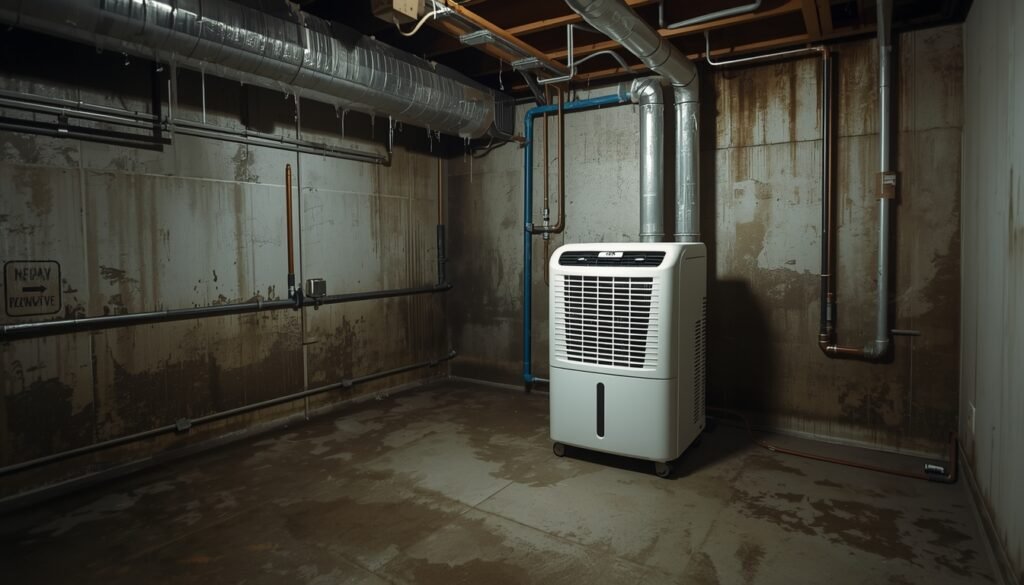
In most homes, a dehumidifier will start improving basement conditions within a few hours, but fully drying a basement usually takes anywhere from 24 hours to several days, depending on how much moisture is present. A common issue is expecting the space to feel completely dry overnight, when in reality moisture is stored not just in the air, but also in the walls, floors, and items inside the basement.
This typically happens when humidity has been building up over time. Even if the basement does not look wet, materials like concrete and wood can hold a surprising amount of moisture. As a result, the dehumidifier needs time to gradually remove moisture from both the air and the structure of the space.
What Determines How Long It Takes?
- The size of the basement and how much air needs to be treated
- The starting humidity level and how damp the space is
- The capacity and power of the dehumidifier
- Airflow and how well air circulates around the room
- Whether moisture is still entering the basement from outside
In most homes, it is not just one factor but a combination of these that determines drying time. Many people find that even a powerful dehumidifier will take longer to work if the basement is cluttered or poorly ventilated. For example, a small basement with mild humidity might feel noticeably drier within a day, while a large or very damp basement may take several days of continuous operation before conditions stabilise.
What Happens When You First Turn It On?
- The air feels lighter and less sticky within a few hours
- Musty smells often begin to fade within a day
- Condensation on surfaces may reduce after 24 to 48 hours
- The overall environment becomes more comfortable within a couple of days
Many people find that these early improvements can be misleading. The air may feel dry, but moisture can still be present in walls, flooring, and stored items. This is why the dehumidifier needs to keep running even after the space seems better.
Why It Takes Time to Fully Dry a Basement
A common issue is assuming that drying the air is enough. In reality, most of the moisture in a basement is often held in materials rather than floating in the air.
Concrete walls and floors absorb moisture from the surrounding soil. Wood framing, furniture, cardboard boxes, carpets, and fabrics can also trap dampness. Hidden areas may stay wet longer than expected, especially in corners or behind stored items. Many people find that once the air dries, the dehumidifier continues working by pulling moisture out of these materials. This is a slower process, which is why full drying takes longer than expected.
How to Speed Up the Drying Process
To improve results, make sure the dehumidifier is correctly sized for the basement and not tucked into a corner where airflow is restricted. In most homes, using a fan to circulate air around the space makes a noticeable difference because it helps move damp air toward the unit.
It also helps to keep windows and doors closed during humid weather so new moisture is not constantly entering the space. Many people find that continuous drainage is useful because it allows the unit to keep running without interruption. If there are obvious moisture sources, such as minor seepage or poor drainage outside, dealing with those issues will also reduce drying time.
How Do You Know When the Basement Is Dry?
The best way to confirm that the basement is dry is to monitor humidity rather than relying only on feel. In most homes, a hygrometer gives the clearest answer because it shows whether humidity is staying between 30 and 50 percent.
Other good signs include musty smells fading away, condensation no longer appearing on surfaces, and the air feeling lighter rather than heavy or sticky. Many people find that once the basement reaches this point, the dehumidifier no longer needs to run constantly and instead switches into a maintenance role.
When Drying Takes Too Long
If the basement still feels damp after several days of continuous use, the dehumidifier may be too small for the space, poorly placed, or dealing with an ongoing source of moisture. In most homes, this happens when the unit is trying to catch up with humidity that is being constantly replaced.
For example, a basement with poor drainage outside the foundation may stay damp because moisture keeps entering faster than the dehumidifier can remove it. Many people find that upgrading the unit, improving airflow, or addressing outside moisture sources solves the problem.
Final Thoughts
A basement dehumidifier does not dry a space instantly, but it works steadily to reduce moisture over time. In most homes, you will notice improvements within hours, but full drying takes longer because moisture must be removed from both the air and the materials in the basement.
Understanding this process helps set realistic expectations and makes it easier to use the dehumidifier effectively. Once the basement is dry, keeping humidity stable becomes much easier, and the space remains more comfortable, fresher, and better protected from long-term moisture problems.
If you want a broader overview of basement moisture, humidity control, and how dehumidifiers fit into the bigger picture, see our Complete Guide to Basement Dehumidifiers.