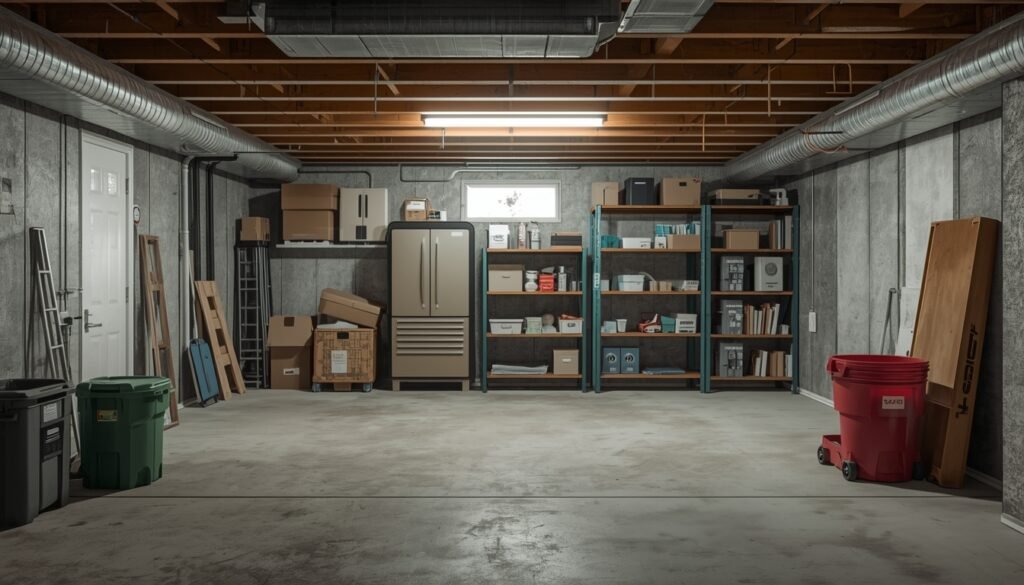
Placing a dehumidifier in the right location is just as important as choosing the right unit. In most homes, basements have uneven airflow and varying moisture levels, which means placement can directly affect how well the dehumidifier works. A common issue is putting the unit in a convenient spot rather than an effective one, which can reduce its ability to control humidity properly.
This article explains where you should place a dehumidifier in a basement, how placement affects performance in real-world situations, the signs of poor placement, and practical tips for getting the best results. Understanding this helps you maximise efficiency and maintain consistent humidity control.
In simple terms, a dehumidifier should be placed in an open, central location where air can circulate freely and moisture can be removed evenly from the space.
Why Placement Matters?
A dehumidifier works by pulling in air, removing moisture, and releasing drier air back into the room. For this process to be effective, the unit needs access to as much air as possible.
In most homes, a common issue is restricted airflow. This typically happens when the unit is placed in a corner, behind furniture, or in a cluttered area. When airflow is limited, the dehumidifier can only treat a small portion of the air, leaving the rest of the basement humid.
For example, placing the unit behind storage boxes may seem convenient, but it prevents proper air circulation and reduces effectiveness.
Where Is the Best Place to Put a Dehumidifier?
The ideal location for a basement dehumidifier is in a central, open area where air can move freely around it. This allows the unit to draw in humid air from all directions and distribute drier air evenly.
Many people find that placing the unit near the center of the basement produces the most consistent results. This typically happens because the air can circulate without obstruction.
If your basement has multiple sections, placing the unit in the most humid area can also be effective. For example, if one part of the basement feels damp or has visible condensation, that area may benefit from targeted placement.
Should You Place It Near a Wall?
In most cases, a dehumidifier can be placed near a wall, but it should not be pushed directly against it. A common issue is placing the unit too close to a wall, which restricts airflow and reduces performance.
Most manufacturers recommend leaving some space around the unit to allow air to circulate properly. This typically means keeping it at least a short distance away from walls and obstacles.
For example, leaving a gap of several inches around the unit helps ensure it can draw in and release air effectively.
What About Placing It in a Corner?
Placing a dehumidifier in a corner is usually not ideal. In most homes, corners have limited airflow, which means the unit will not be able to process air from the entire basement.
A common issue is that moisture remains in other parts of the space because the unit is only treating the air immediately around it.
Many people find that moving the unit from a corner to a more open location improves performance significantly.
Signs Your Dehumidifier Is in the Wrong Place
- The basement still feels damp even when the unit is running
- Humidity levels remain uneven in different areas
- Musty odors persist in certain parts of the basement
- The unit runs constantly without improving conditions
In most homes, these issues are often related to poor airflow rather than a problem with the unit itself.
Key Factors That Affect Placement
- The layout and size of your basement
- Areas with higher moisture levels
- Airflow and ventilation in the space
- The location of walls, furniture, and stored items
A common issue is not considering how air moves through the basement. In most homes, improving airflow can make a significant difference in how well the dehumidifier performs.
How to Get the Best Results?
- Place the unit in an open area with good airflow
- Avoid corners and tight spaces
- Keep the area around the unit clear of obstructions
- Use continuous drainage if available for uninterrupted operation
For example, many homeowners find that relocating the unit to a more central position improves humidity control within a short period.
Common Mistakes
One common mistake is placing the dehumidifier wherever there is space rather than where it will be most effective. Another is surrounding the unit with storage items, which restrict airflow.
Some homeowners also move the unit frequently, which can prevent it from maintaining stable humidity levels.
Ignoring airflow and ventilation is another issue that can reduce overall performance.
If you want a broader overview of how basement moisture, humidity levels, and dehumidifier use all fit together, see our Complete Guide to Basement Dehumidifiers.
Final Thoughts
Where you place a dehumidifier in your basement has a direct impact on how well it works. In most homes, placing the unit in a central, open location with good airflow provides the best results.
By understanding how placement affects performance and making a few simple adjustments, you can improve humidity control and create a more comfortable basement environment.