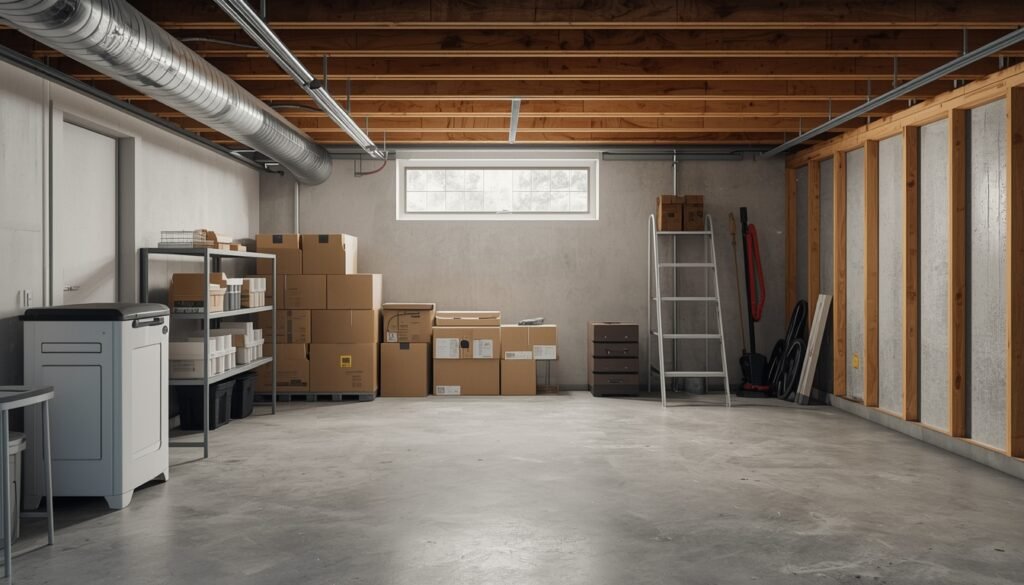
Choosing the right size dehumidifier for your basement is one of the most important steps in controlling humidity effectively. In most homes, basements have higher moisture levels than other areas, which means the unit needs to be powerful enough to handle the conditions. A common issue is that homeowners either choose a unit that is too small, which struggles to keep up, or one that is too large, which may not run efficiently.
This article explains how dehumidifier sizing works, how it affects your basement in real-world situations, the signs you may have the wrong size, and how to choose the right capacity for your space. Understanding this helps you get better performance and avoid ongoing moisture problems.
In simple terms, the right size dehumidifier is one that can remove enough moisture to keep your basement between 30 and 50 percent humidity without running constantly.
What Does Size Mean for a Dehumidifier?
Dehumidifier size does not refer to its physical dimensions but to its moisture removal capacity. This is usually measured in pints per day, which indicates how much water the unit can remove from the air within a 24-hour period.
In most homes, a higher pint rating means the unit can handle more moisture. A common issue is assuming that a smaller unit will be enough because the basement is not very large. This typically happens when only square footage is considered and moisture levels are overlooked.
For example, a moderately sized basement with high humidity may require a larger unit than a bigger basement that remains relatively dry.
Why Basement Conditions Matter More Than Size Alone?
While square footage is important, the level of dampness plays a bigger role in determining the right size dehumidifier. In most homes, basements are classified as slightly damp, moderately damp, or very damp.
A common issue is underestimating how damp the basement actually is. This typically happens when there is no visible water, but humidity levels are still high enough to cause problems.
For example, a basement with musty odors or condensation is likely more humid than it appears, which means it may require a higher capacity unit.
General Sizing Guidelines
- Small basement up to 500 sq ft, slightly damp: 20 to 30 pint unit
- Medium basement 500 to 1000 sq ft, moderate humidity: 30 to 50 pint unit
- Large basement 1000 plus sq ft or very damp: 50 plus pint unit
Many people find that choosing a slightly larger unit than the minimum recommendation provides better results. This typically happens because the unit can remove moisture more efficiently and run less often.
Signs Your Dehumidifier Is Too Small
- The unit runs constantly but the basement still feels damp
- Humidity levels remain above 50 percent
- Musty odors persist despite running the unit
- Condensation or mold continues to appear
A common issue is assuming the unit is faulty when it is actually undersized. Many people find that upgrading to a higher capacity unit solves the problem quickly.
Signs Your Dehumidifier May Be Too Large
While less common, a unit that is too large can also create issues. In some cases, it may remove moisture too quickly and cycle on and off frequently.
This typically happens when the unit reaches the desired humidity level very quickly and then shuts off before running long enough to circulate air properly.
However, in most basements, choosing a slightly larger unit is still better than choosing one that is too small.
How to Choose the Right Size Dehumidifier?
- Measure or estimate the square footage of your basement
- Assess the level of humidity based on signs such as odors or condensation
- Choose a unit that matches both size and moisture level
- When in doubt, select a slightly higher capacity unit
For example, many homeowners find that moving up one size category improves performance and reduces how often the unit needs to run.
How Proper Sizing Affects Performance?
Using the correct size dehumidifier improves both efficiency and effectiveness. In most homes, a properly sized unit will reach the desired humidity level faster and maintain it more consistently.
A common issue with undersized units is that they run continuously without achieving results. This not only reduces effectiveness but can also increase energy usage over time.
Many people find that once they switch to the correct size, the basement becomes noticeably drier and more comfortable within a short period.
Common Mistakes
One common mistake is choosing a unit based only on square footage without considering moisture levels. Another is underestimating how damp the basement is.
Some homeowners also choose the smallest unit available to save money, which often leads to poor performance and the need for an upgrade later.
Ignoring airflow and placement can also reduce the effectiveness of even a properly sized unit.
If you want a broader overview of how basement moisture, humidity levels, and dehumidifier use all fit together, see our Complete Guide to Basement Dehumidifiers.
Final Thoughts
Choosing the right size dehumidifier for your basement is essential for controlling humidity effectively. In most homes, this means considering both the size of the space and the level of moisture present.
By selecting a unit with the right capacity and using it correctly, you can maintain a dry, comfortable basement and prevent long-term moisture problems.