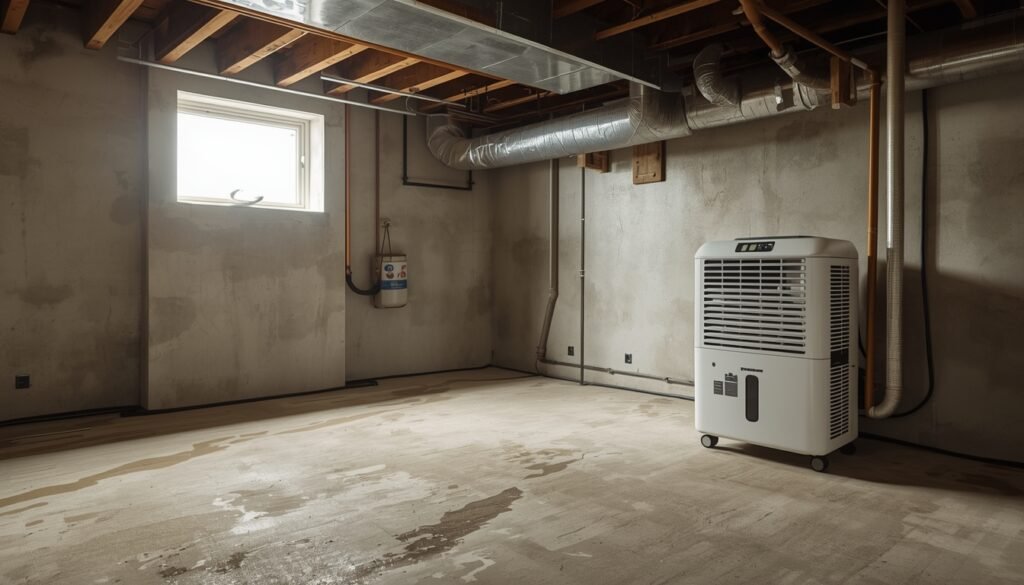
A basement dehumidifier is often one of the most effective tools for controlling moisture, but many homeowners wonder if it is truly worth the cost and effort. In most homes, basements naturally collect more humidity than other areas, which can lead to discomfort and long-term problems if not managed properly. A common issue is that these problems develop gradually, so it is not always obvious whether a dehumidifier is necessary.
This article explains whether a basement dehumidifier is worth it, how it affects your home in real-world situations, the signs that indicate you need one, and how to decide if it is the right solution for your basement. Understanding these factors helps you make an informed decision and avoid unnecessary costs.
In simple terms, a basement dehumidifier is worth it if it prevents moisture-related problems and improves the comfort and condition of your home.
Why Moisture Control Matters in a Basement?
Basements are more prone to humidity because they are surrounded by soil that retains water. This typically happens when moisture slowly enters through walls and floors or when humid air becomes trapped in the space.
In most homes, this moisture builds up over time. A common issue is that homeowners do not notice the effects until problems such as odors or dampness become more noticeable.
For example, a basement may feel slightly cool but also damp. This is often a sign that humidity levels are higher than they should be and need to be controlled.
What Benefits Does a Dehumidifier Provide?
- Reduces moisture levels and prevents damp conditions
- Helps stop mold and mildew from developing
- Eliminates musty odors and improves air quality
- Protects stored items from moisture damage
Many people find that once a dehumidifier is running, the basement becomes noticeably more comfortable. This typically happens within a few days as moisture levels begin to stabilise.
How It Improves Your Home?
The impact of a dehumidifier is not limited to the basement. In most homes, improving basement humidity also improves the overall environment of the house.
A common issue is that musty smells from the basement can spread to upper levels. By reducing humidity, these odors are often eliminated, making the entire home feel fresher.
In addition, controlling moisture helps protect the structure of your home. Over time, excess humidity can weaken materials and lead to gradual damage if it is not addressed.
When Is a Dehumidifier Worth It?
- A musty or stale smell in the basement
- A damp or sticky feeling in the air
- Condensation on surfaces such as pipes or walls
- Mold or mildew appearing in the space
Many people find that these signs indicate a clear need for moisture control. This typically happens when humidity levels remain above the recommended range.
Situations Where It May Not Be Necessary
Not every basement requires a dehumidifier. Some basements remain dry due to good drainage, proper sealing, and effective ventilation.
For example, if your basement consistently stays below 50 percent humidity and shows no signs of dampness, you may not need a dehumidifier.
However, conditions can change with the seasons. A common issue is that a basement that is dry in winter may become humid in summer, which may require temporary use of a dehumidifier.
Key Factors to Consider Before Buying
- The current humidity level in your basement
- The presence of odors, dampness, or condensation
- Seasonal changes that affect moisture levels
- The cost of potential damage if humidity is not controlled
In most homes, these factors help determine whether a dehumidifier is a necessary investment.
How to Get the Most Value from a Dehumidifier?
- Set the humidity level between 30 and 50 percent
- Place the unit in an open area for proper airflow
- Use continuous drainage if possible for convenience
- Run the unit consistently to maintain stable conditions
For example, many homeowners find that once a dehumidifier is set correctly, it requires very little maintenance and provides consistent results over time.
Common Mistakes
One common mistake is waiting until serious problems develop before using a dehumidifier. Another is using the unit inconsistently, which prevents it from maintaining stable humidity levels.
Some homeowners also choose a unit that is too small for the space, which reduces its effectiveness.
Ignoring early signs of humidity can also lead to higher costs later, making a dehumidifier more worthwhile in the long run.
If you want a broader overview of how basement moisture, humidity levels, and dehumidifier use all fit together, see our Complete Guide to Basement Dehumidifiers.
Final Thoughts
A basement dehumidifier is often worth it because it helps prevent moisture-related problems and improves overall comfort. In most homes, it is a practical solution for managing humidity and protecting the basement from long-term damage.
By understanding your basement conditions and using a dehumidifier correctly, you can maintain a dry, comfortable space and avoid costly repairs in the future.