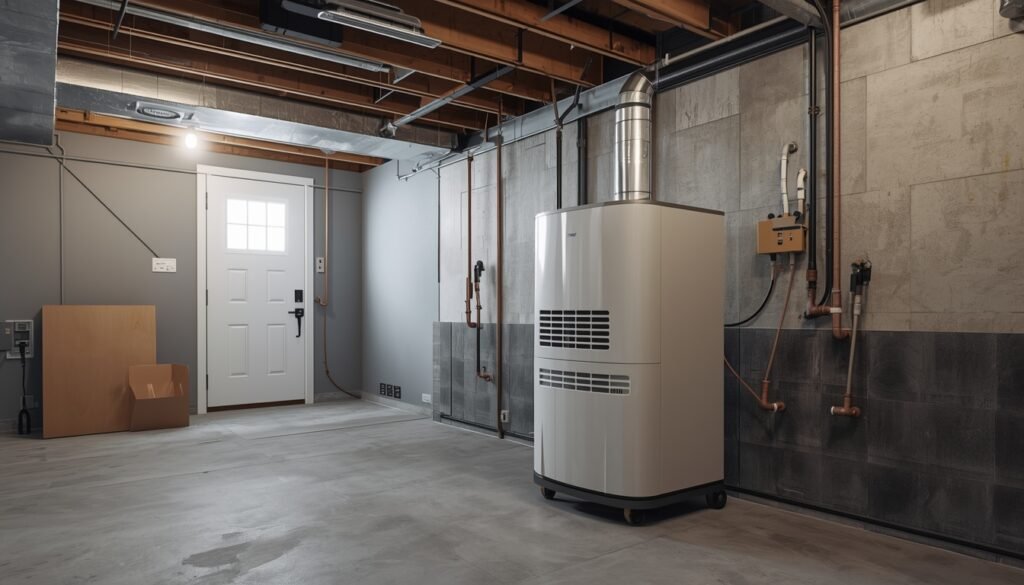
A dehumidifier can play an important role in stopping mold in a basement, but it is not a complete solution on its own. In most homes, mold develops because of excess moisture in the air and on surfaces. A common issue is that homeowners expect a dehumidifier to eliminate mold entirely, when its main job is actually to control the conditions that allow mold to grow.
This article explains how a dehumidifier affects mold, what it can and cannot do, the signs of mold problems, and the steps you need to take to fully address the issue. Understanding this helps you use a dehumidifier effectively and avoid ongoing moisture problems.
In simple terms, a dehumidifier can help stop mold from growing by reducing humidity levels, but it does not remove mold that is already present.
Why Does Mold Grow in Basements?
Mold thrives in environments where moisture, warmth, and organic material are present. In most homes, basements provide ideal conditions because they tend to be cooler, darker, and more humid than other areas.
A common issue is that moisture enters through walls and floors or builds up in the air over time. This typically happens when there is limited ventilation and ongoing exposure to damp conditions.
For example, if humidity levels remain above 60 percent, mold can begin to grow on surfaces such as walls, wood, and stored items. Once it starts, it can spread if the conditions remain favorable.
How Does a Dehumidifier Help Prevent Mold?
A dehumidifier helps by removing moisture from the air, which reduces humidity levels to a range where mold is less likely to grow. In most homes, keeping humidity between 30 and 50 percent makes it much harder for mold to develop.
This typically happens as the dehumidifier continuously pulls moisture out of the air and maintains a stable environment. A common issue is that without this control, humidity fluctuates and creates conditions where mold can thrive.
Many people find that once they start using a dehumidifier consistently, musty smells decrease and the basement feels noticeably drier. This is a sign that moisture levels are being reduced.
What a Dehumidifier Cannot Do?
While a dehumidifier is effective at preventing mold, it does not remove mold that is already present. This is an important distinction that many homeowners overlook.
A common issue is assuming that running a dehumidifier will make existing mold disappear. In reality, mold needs to be cleaned or removed separately.
For example, if mold is already growing on walls or stored items, you will need to address it directly while also using a dehumidifier to prevent it from returning.
Signs You May Have a Mold Problem
- A strong musty or earthy smell
- Visible spots or patches on walls, ceilings, or stored items
- Persistent dampness or high humidity levels
- Allergy-like symptoms when spending time in the basement
Many people find that mold develops gradually. This typically happens when humidity remains high over time without being controlled.
Key Factors That Influence Mold Growth
- Humidity levels above 50 to 60 percent
- Poor airflow and ventilation
- Moisture entering through walls and floors
- The presence of materials that absorb moisture
In most homes, it is a combination of these factors that leads to mold growth. Controlling humidity is one of the most important steps in breaking this cycle.
How to Stop Mold in a Basement?
- Clean or remove any existing mold on surfaces
- Use a dehumidifier to maintain humidity between 30 and 50 percent
- Improve airflow by keeping the space open and ventilated
- Fix any moisture sources such as leaks or drainage issues
For example, many homeowners find that combining mold removal with consistent dehumidifier use prevents the problem from returning.
Common Mistakes
One common mistake is relying on a dehumidifier alone to solve a mold problem. Another is not running the unit consistently, which allows humidity levels to rise again.
Some homeowners also ignore early signs such as musty smells, which often indicate that mold may already be present.
Choosing a unit that is too small for the space can also reduce effectiveness.
If you want a broader overview of how basement moisture, humidity levels, and dehumidifier use all fit together, see our Complete Guide to Basement Dehumidifiers.
Final Thoughts
A dehumidifier is a valuable tool for preventing mold in a basement because it controls humidity levels and creates an environment where mold cannot easily grow. However, it is not a complete solution on its own.
By combining proper mold removal with consistent humidity control, you can stop mold from spreading and maintain a healthier basement environment over time.